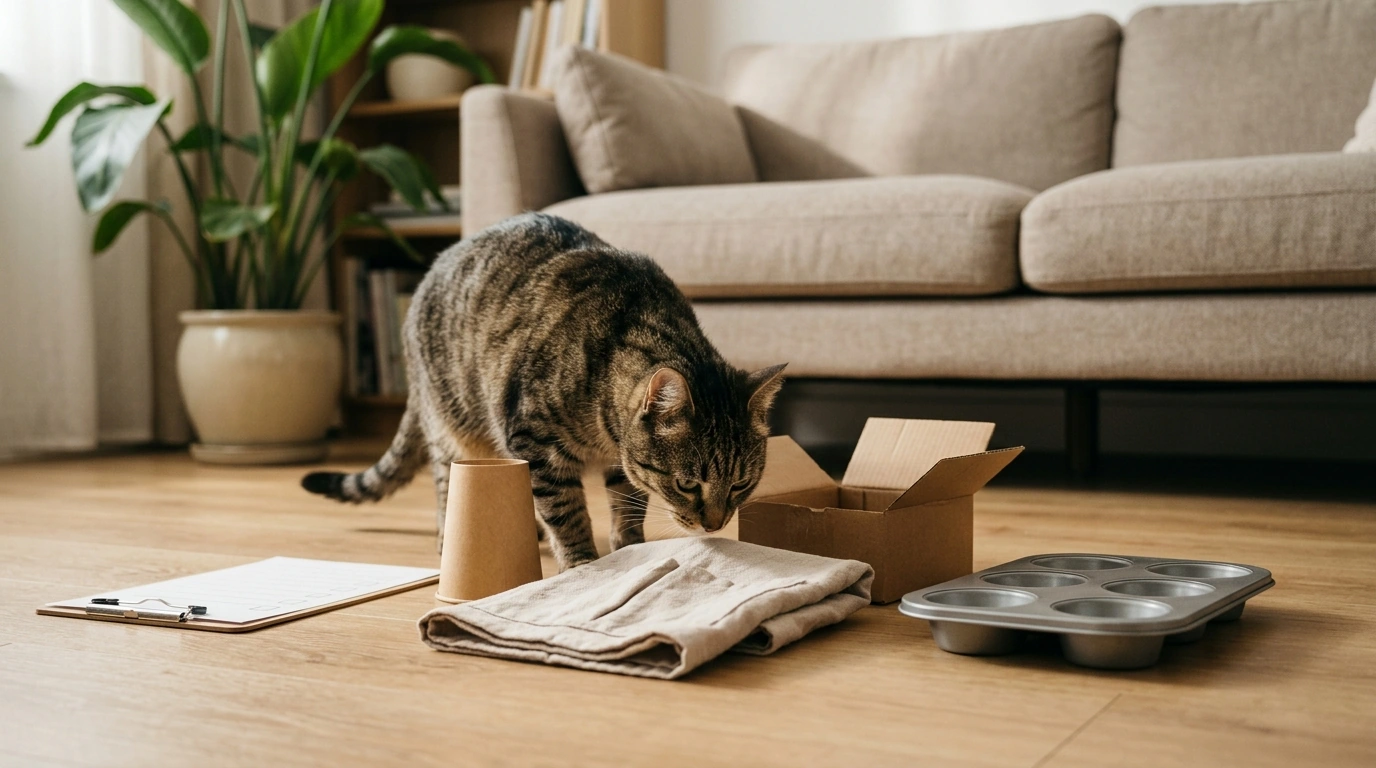
Indoor cats still carry the same instincts as their outdoor ancestors: notice, stalk, search, and “capture.” Scent-based play gives those instincts a safe outlet, turning snack time into a small, satisfying mission. It’s especially helpful when weather, schedules, or apartment living limit big bursts of physical play.
Because scent games ask a cat to slow down and think, they can reduce boredom behaviors such as excessive meowing, counter-surfing, or rough play between pets. They also create predictable, positive routines—an underrated benefit for high-energy cats, solo cats, and cats who thrive on consistency. Best of all, most scent games work in small spaces and rely on simple household items rather than a pile of new toys.
For guidance on the broader “why” behind enrichment and a cat-friendly home setup, these references are worth bookmarking: International Cat Care (iCatCare), ASPCA enrichment resources, and AAHA pet owner guidance.
The Curious Cat’s Scent Game Checklist is built for quick use: a printable, interactive format that helps keep sessions consistent without turning enrichment into another chore. It includes a variety of scent-game prompts, reminders to rotate difficulty, and simple tracking so it’s easier to notice patterns—like which hides boost confidence and which ones cause frustration.
As a digital download, it’s flexible: print it, use it on a tablet, or keep a reusable copy in a sheet protector. The goal is a repeatable routine that fits real life—busy mornings, after-work downtime, or a calm wind-down before bed.
| Feature | Checklist scent games | Typical toy session |
|---|---|---|
| Primary focus | Sniffing, searching, problem-solving | Chasing, pouncing, batting |
| Setup time | Low (often 2–5 minutes) | Low to moderate |
| Skill progression | Easy to scale with hiding spots and containers | Often similar intensity unless toys change |
| Best for | Indoor enrichment, calm focus, solo play setups | Energy burn, interactive bonding |
| Tracking and rotation | Built-in (checklist encourages variety) | Depends on memory/habit |
A good scent game doesn’t need fancy gear. Start with what’s already in the kitchen and recycling bin:
Keep materials simple, lightweight, and easy to supervise. The best setups are the ones that can be assembled and cleaned up in minutes.
Rotating games helps prevent “been there, solved that” boredom. A checklist makes rotation easy because you can alternate fast wins with slightly harder searches.
For households that like structured routines, pairing the checklist with a simple scheduling tool can help. Using AI to Keep Your Pet Happy and Healthy is a digital guide that focuses on organizing care tasks, tracking wellness, and automating reminders—useful when multiple caregivers share feeding and play responsibilities.
Most cats do best with short sessions of about 3–10 minutes. End on a win, especially when introducing a new hiding style or container.
They work best as a complement. Scent games build calm focus and problem-solving, while wand play supports physical exercise and interactive bonding.
Avoid essential oils and strong fragrances around cats. Stick to cat-safe food rewards and familiar materials, and ask a veterinarian if you’re unsure about a specific product.




Leave a comment