Yoga as a Lifestyle Hobby: A Gentle Path to Everyday Routines
Yoga fits into real life when it’s treated like a hobby you return to, not a performance you have to “nail.” You don’t need long classes, a perfectly flexible body, or a wide-open schedule. With a few simple building blocks—breath, basic movements, and steady repetition—yoga becomes a friendly ritual that can support energy, mobility, and a calmer mind throughout the week. Research summaries from sources like NCCIH and Harvard Health also highlight how yoga can contribute to flexibility, strength, and stress management when practiced consistently and safely.
What it means to treat yoga as a hobby (not a performance)
A hobby mindset keeps yoga approachable. Instead of chasing intensity or advanced poses, the goal becomes showing up in a way that supports your day.
- Keep it low-pressure: Regular, modest sessions beat occasional all-out workouts.
- Use yoga for daily living: Think desk posture resets, recovery after walks, and downshifting before sleep.
- Redefine success: Five to twenty minutes counts. Consistency is the win.
- Match the day: Choose gentle, slow flow, or restorative based on how you feel instead of forcing one routine.
- Stay curious: Breathwork, balance, mobility, and relaxation can each be their own mini-hobby.
Getting started safely: comfort, breath, and simple alignment
Beginner-friendly yoga should feel steady and nourishing—more like “I can do this again tomorrow” than “I survived that.”
- Start with breath as the anchor: Slow nasal breathing with longer exhales can help your body downshift from stress.
- Use pain as a stop sign: Aim for mild effort and stretch sensation, not sharp, burning, or tingling feelings.
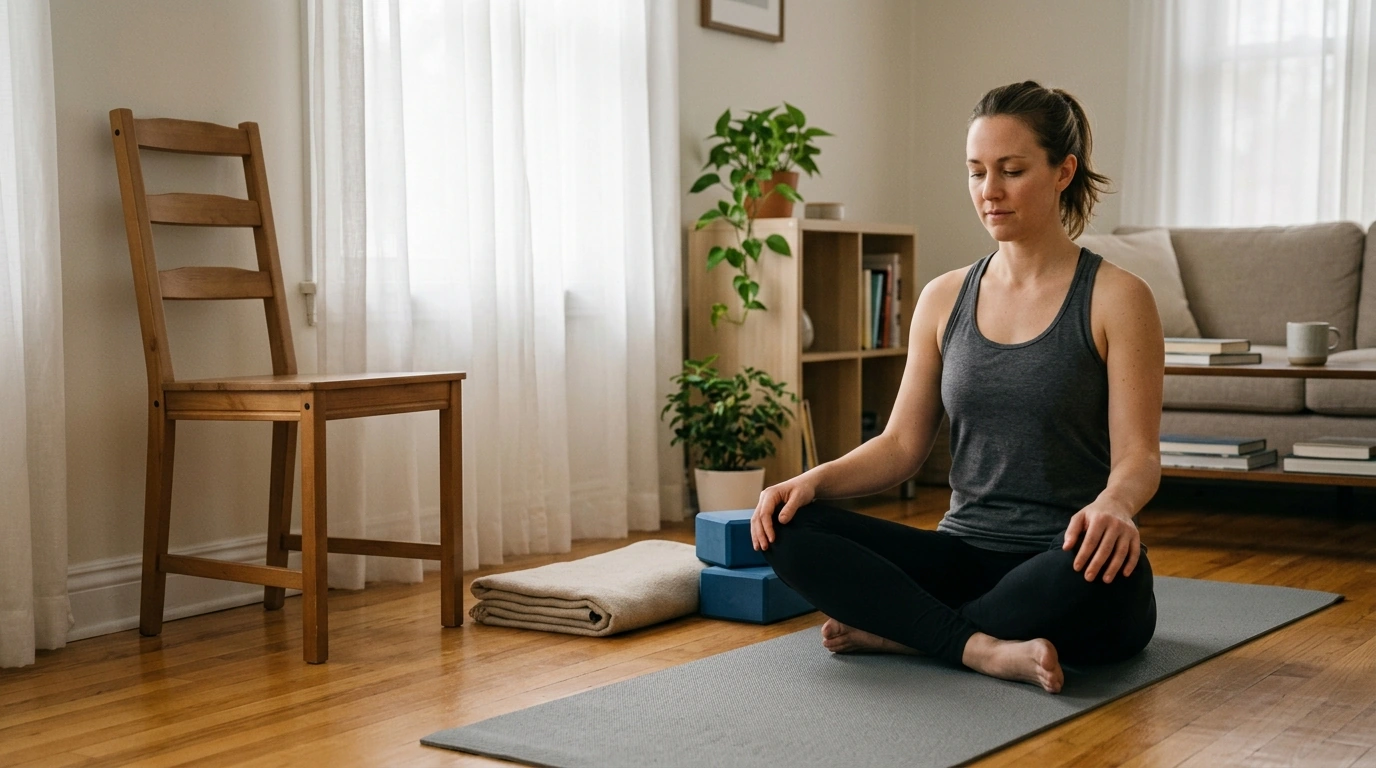
- Set up a simple kit: A non-slip mat, a folded blanket, and two firm cushions or blocks cover most needs.
- Modify early and often: Bent knees in forward folds, hands on a chair for balance, and a smaller range of motion are smart—not “less than.”
- Plan for consistency: Tie yoga to a reliable cue like after brushing teeth, after lunch, or before bed.
Core building blocks for beginner-friendly routines
When you’re building a hobby, it helps to keep a “small menu” of dependable moves. Rotate them, repeat them, and let your body learn the patterns.
Warm-up ideas
- Neck and shoulder rolls
- Cat-cow
- Gentle spinal twists
- Ankle circles
Foundational poses to rotate
- Mountain pose
- Chair pose (supported with a wall or chair)
- Low lunge
- Bridge pose
- Sphinx or a very gentle cobra
- Child’s pose
- Legs-up-the-wall
Balance and stability basics
- Supported tree pose (hand on a wall)
- Heel-to-toe walk across the room
- Standing hip openers with a wall for support
Cooldown essentials
- Seated forward fold (modified—bent knees and a tall spine)
- Reclined twist
- Short relaxation
Breath and mind finishers
- 1–3 minutes of breath counting
- A quick body scan (notice jaw, shoulders, belly, and hips softening)
Simple weekly structure that turns yoga into an everyday hobby
A practical weekly rhythm prevents the most common beginner trap: all-or-nothing weeks. Keep a “minimum routine” you can do even on busy days, and an “ideal routine” for when time opens up.
- Minimum routine: 5 minutes (never too small to matter).
- Ideal routine: 15–25 minutes (still manageable, but more complete).
- Alternate focus days: Mobility, strength/stability, relaxation, and light flow.
- Pair yoga with existing habits: Morning coffee, commute decompression, or a post-walk stretch.
- Track consistency simply: A calendar check mark beats measuring flexibility.
Sample beginner week: pick one routine per day
| Day |
Time |
Focus |
Routine sketch |
| Mon |
10–15 min |
Mobility |
Breath (1 min) → Cat-cow (1 min) → Low lunge (2 min/side) → Seated twist (1 min/side) → Relax (2 min) |
| Tue |
5–10 min |
Desk reset |
Shoulders/neck (2 min) → Standing forward fold (modified) (1 min) → Chest opener at wall (1 min) → Calm breathing (2 min) |
| Wed |
15–20 min |
Strength & stability |
Mountain → Chair (supported) → Bridge (3 rounds) → Sphinx (1–2 min) → Supported tree (1 min/side) → Relax (3 min) |
| Thu |
5 min |
Wind-down |
Legs-up-the-wall (3 min) → Reclined twist (1 min/side) → Long exhales (1 min) |
| Fri |
15 min |
Gentle flow |
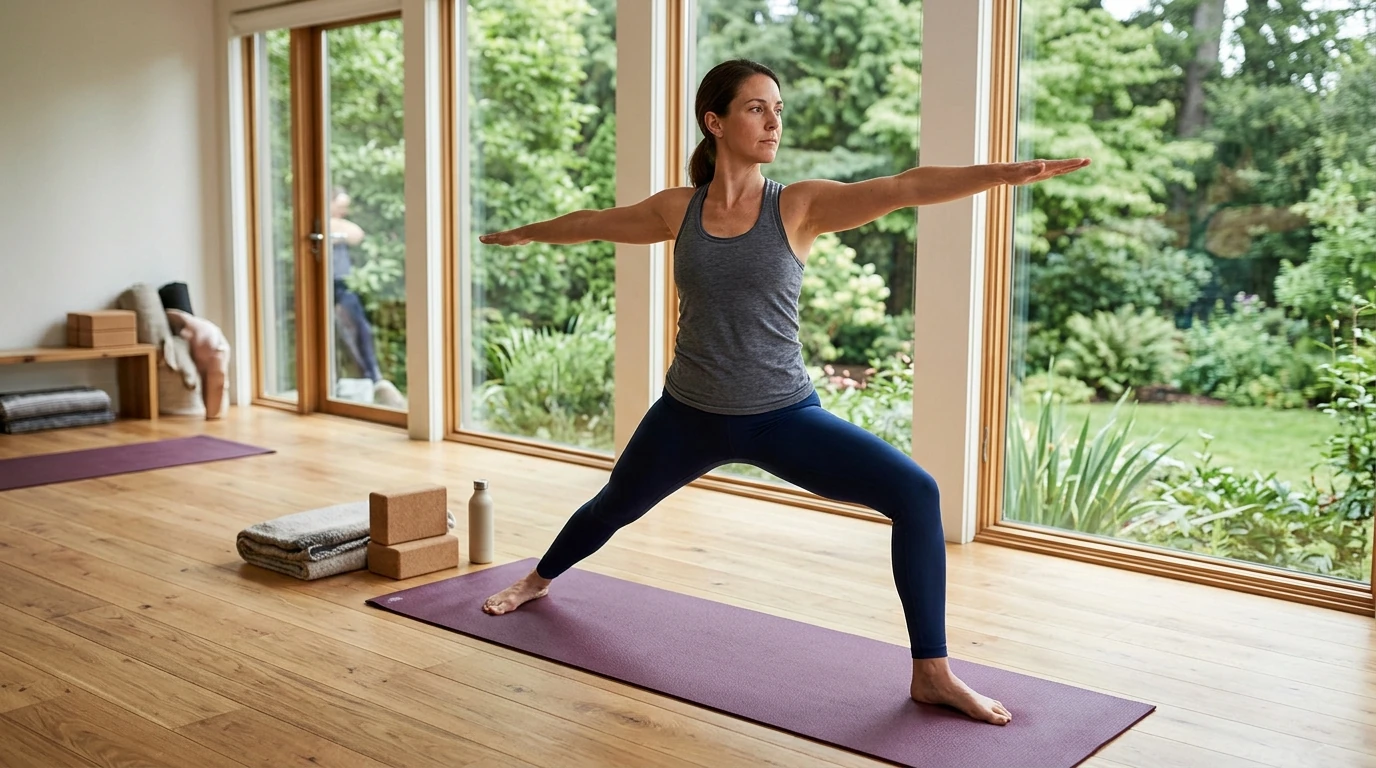
Warm-up → Low lunge → Warrior variation (small range) → Wide-leg fold (supported) → Child’s pose → Relax |
| Sat |
20–30 min |
Hobby session |
Explore: longer holds, props, slow pacing, a short guided relaxation |
| Sun |
10–15 min |
Restorative |
Supported child’s pose → Reclined bound angle (supported) → Body scan relaxation |
Making routines stick: environment, motivation, and tiny goals
Common beginner obstacles and easy fixes
A gentle resource to guide routine-building day by day
FAQ
How often should a beginner do yoga to make it a habit?
Three to five days per week works well for most beginners, especially if you keep a 5-minute minimum. Consistency matters more than duration, and one longer session on the weekend can be a nice add-on.
Is it okay to do yoga every day as a beginner?
Yes, as long as the intensity stays gentle and you rotate your focus (mobility, strength, restorative). Avoid pushing into pain, and include at least one restorative day to support recovery.
What is a simple 5-minute yoga routine for busy days?
Try: 5 slow breaths standing, 1 minute of cat-cow, low lunge on each side, a modified forward fold with bent knees, then 1 minute of relaxation or calm breathing.
Recommended for you




Leave a comment