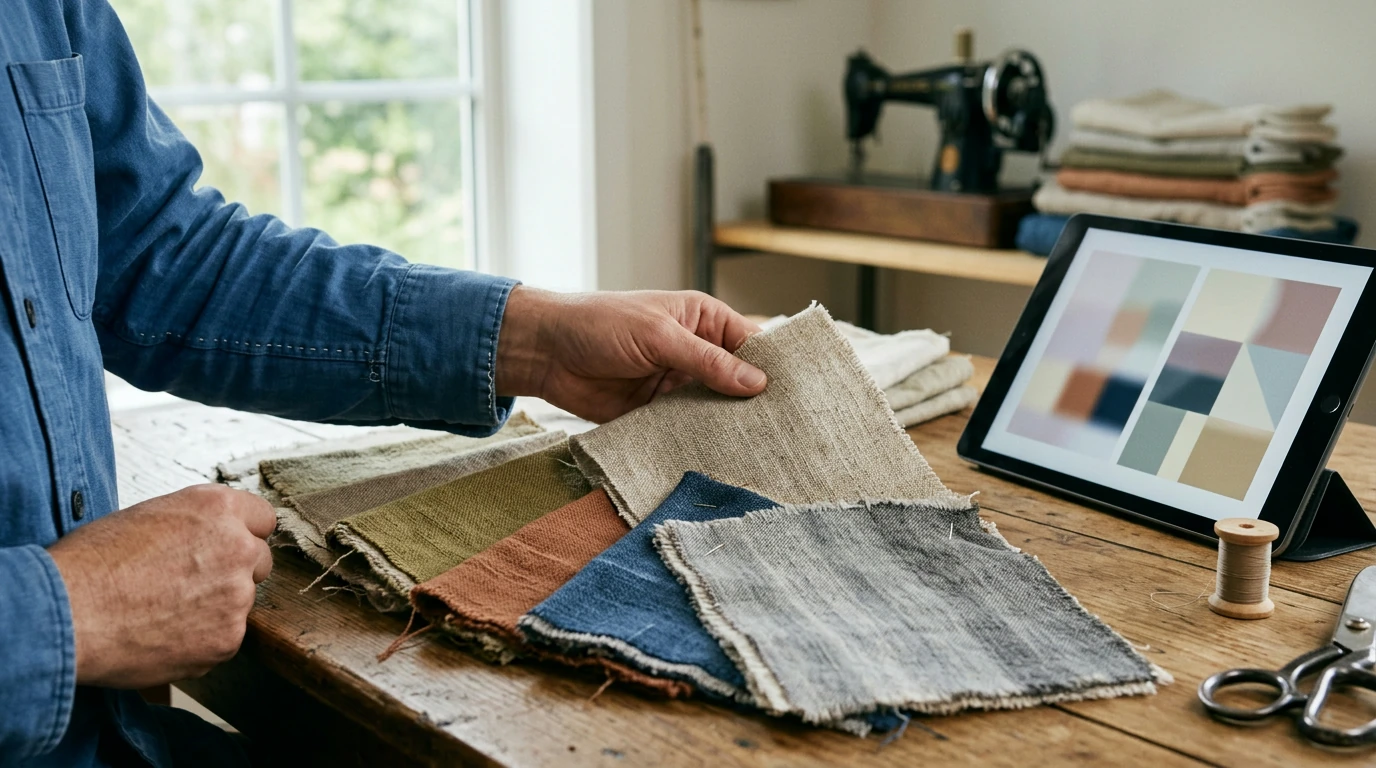
Fabric decisions shape a garment’s footprint long before it reaches your closet—through farming or extraction, dyeing and finishing, worker conditions, and end-of-life outcomes. Our ebook, Smart Fabrics for a Sustainable Future ebook guide, is built for real life: you get a repeatable way to compare textiles, challenge “eco” claims, and make clearer trade-offs using an AI-assisted decision lens—without turning shopping or sourcing into a second job.
When people hear “smart fabric,” they often think of sensors or wearables. In sustainability, “smart” can also mean smarter selection: choosing fibers, blends, dyes, and finishes with measurably lower impacts for the specific job your garment needs to do. That means looking beyond the fiber name to the impact drivers that actually move the needle—energy and water use, chemistry, land use, microfiber shedding, durability, repairability, and recyclability.
Ethical fashion adds the human layer: traceability, safer working conditions, and responsible sourcing across the supply chain. Our team’s goal is consistency—decision rules you can reuse across brands, seasons, and budgets, so your standards don’t reset every time marketing language changes.
A fabric that’s great for a breezy shirt can be a poor pick for abrasion-heavy activewear. Start with how you’ll actually wear, wash, and rely on the item.
“Organic” or “recycled” can be meaningful, but processing and finishing still matter. Dye systems, wrinkle-free finishes, water repellency treatments, and blend percentages can outweigh a single label claim.
If a piece pills, stretches out, or loses shape quickly, replacement frequency can erase sustainability wins on paper. Longevity is often the quietest, biggest lever you control.
Complex blends and heavily treated fabrics can be hard to recycle or biodegrade. Simpler constructions often age better and have clearer end-of-life pathways.
Some natural fibers can be water- or chemical-intensive depending on farming, retting, and finishing. “Natural” is a starting point, not a conclusion.
Our guide uses a simple sequence that keeps you out of the “perfect fabric” trap:
| Fabric family | Where it shines | Watch-outs to verify | Better-bet upgrades |
|---|---|---|---|
| Plant-based (cotton, linen, hemp) | Breathable staples; great for warm weather and everyday basics | Farming inputs, water use, dye/finish chemistry, opacity and durability | Prioritize durable weaves; look for improved traceability; choose undyed/low-impact dye options when possible |
| Regenerated cellulosics (lyocell/TENCEL™, modal, viscose/rayon) | Soft drape, smooth handfeel, versatile for shirts and dresses | Solvent/process type, forest sourcing, and whether supply chain transparency is provided | Prefer closed-loop processes and stronger traceability signals; avoid heavy chemical finishes when possible |
| Animal-based (wool, alpaca) | Thermoregulation; odor resistance; longevity with good care | Animal welfare standards, land use impacts, and finishing treatments | Choose durable weights; consider mulesing-free claims where relevant; prioritize long-wear pieces |
| Synthetics (polyester, nylon, elastane blends) | Performance stretch, weather resistance, quick dry for activewear | Microfiber shedding, recycling limitations (especially blends), fossil-based feedstocks | Prefer recycled content when it supports performance; choose tighter knits/weaves; wash-care strategies to reduce shedding |
The point of AI here isn’t to outsource judgment—it’s to make your judgment more consistent. In Smart Fabrics for a Sustainable Future ebook guide, you turn “sustainable” into a weighted checklist that reflects your life: climate impact, water, chemistry, durability, comfort, and ethics. You learn how to compare trade-offs by asking for specifics (blend percentages, finish types, care demands) so vague claims don’t sneak through.
The most sustainable garment is the one you wear repeatedly. A simple outfit system prevents “good material, wrong use” by making sure your pieces coordinate and stay in rotation. If you’re building an office-friendly wardrobe, our team also recommends pairing fabric upgrades with an easy styling framework like Sneakers at Work, Styled Right – A Modern Style Guide, so your better purchases actually earn their cost-per-wear.
No—“natural” doesn’t automatically mean low-impact. Farming inputs, water use, processing methods, dyes/finishes, durability, and end-of-life outcomes can shift the footprint dramatically, so it’s smarter to match the fabric to the use case and verify traceability.
Use AI as a structured comparison tool: make it state assumptions, ask for specific details like blend percentages and finish types, and cross-check certifications or sourcing claims. A personal rubric helps you compare trade-offs consistently instead of relying on vague “eco” summaries.
Pick three categories you buy most often (like tees, denim, and activewear), then prioritize durability-first fabrics and simpler constructions. Ask two or three transparency questions (origin, processing, and worker standards), and focus on items you’ll wear frequently.





Leave a comment