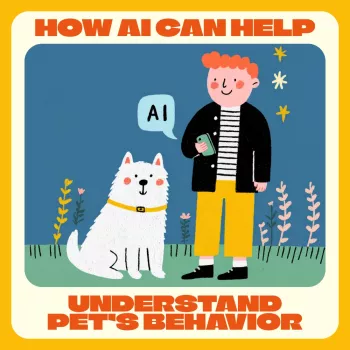
Behavior changes are often the earliest sign that something is off—stress, boredom, pain, environmental triggers, or shifting routines. AI-assisted pet monitoring helps turn everyday observations (movement, vocalizations, sleep, eating, litter/yard habits) into clearer patterns over time. By building a baseline for “normal” and flagging meaningful deviations, owners can respond earlier, reduce guesswork, and share more useful notes with trainers or veterinarians. For more guidance, see How A.I. Is Revolutionilizing Pet Health | Yeshiva University.
AI pet monitoring is less about “mind reading” and more about pattern recognition. When the same signals are collected repeatedly—through devices or simple logs—software can summarize trends that are hard to notice day to day. For further reading, see Transforming Pet Care Using AI – The Decision Lab.
Some signals are naturally “countable” and trend-friendly; others are highly contextual and need human interpretation.
For general behavior education and humane training guidance, the American Veterinary Medical Association (AVMA) and the American Animal Hospital Association (AAHA) are solid references.
A practical monitoring setup should reduce uncertainty, not add extra noise. A lightweight routine tends to work best—especially in busy households.
For many homes, tracking activity, sleep, vocalization, and feeding is enough to establish a stable baseline without overwhelm.
Context is what turns “data” into “meaning.” Note schedule changes, new food/treats, visitors, construction noise, travel, and medication timing.
One restless night can be weather or neighborhood noise. A multi-day drift—less movement, more hiding, worsening sleep—usually deserves a closer check.
When an alert comes in, do a fast head-to-tail scan: hydration, stool quality, coat/skin, gait, and environment (temperature, access to litter/yard).
For boredom or stress patterns, a training plan and enrichment changes are often the right next step. For appetite drops, pain cues, or sudden behavior shifts, contact your veterinarian—especially if symptoms are persistent.
| Signal flagged | What to note right away | Possible next step |
|---|---|---|
| Reduced activity (2–3 days) | Appetite, limping, reluctance to jump, temperature/heat | Reduce intensity of exercise; consider vet check if persistent |
| Frequent vocalization spike | Time of day, triggers (doorbell, neighbors), separation period | Adjust routine/enrichment; trainer consult if escalating |
| Sleep disruption | Night noises, bathroom access, pain cues, senior status | Environment changes; vet consult if sudden or worsening |
| Repetitive licking/scratching | Skin/coat check, new detergent/food, fleas/ticks | Grooming/parasite check; vet if inflamed or persistent |
| Feeding changes | Food brand/amount, stressors, nausea signs, water intake | Return to consistent diet; vet if refusal >24 hours or with lethargy |
AI can flag deviations from your pet’s baseline (sleep, activity, appetite, vocalizations), but it can’t diagnose illness. Use alerts as a cue to check context and monitor for persistence, and contact a veterinarian for ongoing or severe changes.
Many households get a useful baseline in about 1–2 weeks, especially with consistent routines. If schedules vary or data is spotty, it may take longer, and adding simple context notes improves reliability.
Start with 2–4 signals: activity, sleep, vocalization, and feeding, plus brief notes about routine changes. Once that’s stable, add more specific behaviors like licking/scratching or litter/yard habits.






Leave a comment