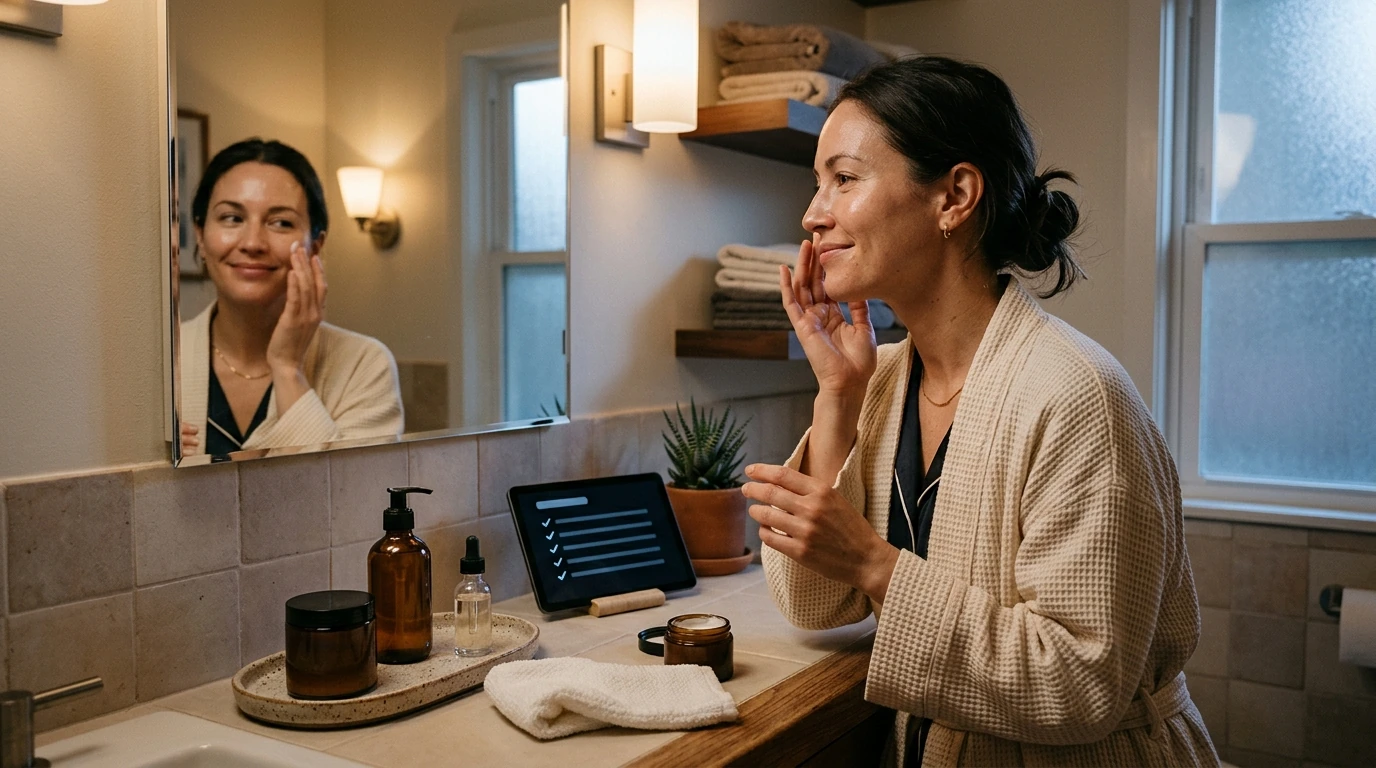
A consistent night routine gives skin the downtime it needs to recover from daily stress, makeup, sunscreen, and pollution. The goal is simple: cleanse thoroughly, support the moisture barrier, use targeted actives thoughtfully, and lock in hydration so skin looks more even and refreshed by morning. Below is a flexible, step-by-step routine that works on busy nights—and a checklist-style approach that makes consistency easier to maintain.
For everyday skin-care fundamentals (like gentle cleansing and avoiding irritation), the American Academy of Dermatology Association is a reliable reference point.
If you wore makeup or heavy sunscreen, start with an oil or balm cleanser to dissolve the day. Follow with a gentle water-based cleanser if your skin needs it. If you didn’t wear makeup, a single gentle cleanse is often enough—especially for dry or sensitive skin.
Apply a hydrating toner/essence or a simple humectant serum to slightly damp skin. This helps reduce transepidermal water loss and makes the next steps feel more comfortable.
Pick one primary “treat” product for the night based on your goal:
Use a barrier-supporting moisturizer and adjust the richness based on season and comfort. If skin feels tight after cleansing, you usually need more moisture—not less.
If you’re dry, peeling, or using a retinoid, a thin layer of occlusive balm on the flakiest zones (around the mouth, corners of the nose, cheekbones) can reduce irritation and help you wake up smoother.
| Skin goal | Best “treat” choice | How often to start | Support step that helps |
|---|---|---|---|
| Clogged pores and blackheads | Salicylic acid (BHA) | 2 nights/week | Lightweight, non-greasy moisturizer |
| Fine lines and uneven texture | Retinoid | 2 nights/week | Moisturizer before/after (sandwich method) |
| Redness and blemish marks | Azelaic acid | 3 nights/week | Barrier cream with ceramides |
| Dryness and sensitivity | No active (recovery night) | As needed | Humectant serum + occlusive on dry zones |
If the hardest part is deciding what to do each night (and sticking with it), a structured routine guide can help. Night Skin Reset – Night Skincare Routine Guide, Digital eBook for Glowing Morning Skin, Evening Routine Checklist & AI Skin Care Prompts organizes an evening routine into repeatable steps and includes a checklist to reduce missed steps and overcomplicated layering.
For anyone who likes building consistent habits across life—not just skincare—these in-stock digital guides can pair well with a nightly reset mindset: Using AI to Keep Your Pet Happy and Healthy | Digital Guide on How to Use AI to Schedule Pet Care Tasks, Track Wellness & Automate Daily Routines and Western Outfit Combinations for Modern Style | Ebook of Western Inspired Outfit Combinations | Easy Everyday & Workwear Looks.
Most effective routines fit into 2–5 steps. On tired nights, a minimum routine of cleanse + moisturize is enough; add hydration and one treatment step when your skin can tolerate it and your goals call for it.
It can be irritating for many people because both can increase dryness and sensitivity. Alternating nights (and using recovery nights) is usually more comfortable; exceptions depend on your tolerance and the specific formulations.
Pause actives and simplify to a gentle cleanse plus a barrier-supporting moisturizer, then add a thin occlusive layer on the driest areas. Once skin feels calm again, reintroduce one active slowly; if symptoms persist or worsen, consider professional guidance.







Leave a comment