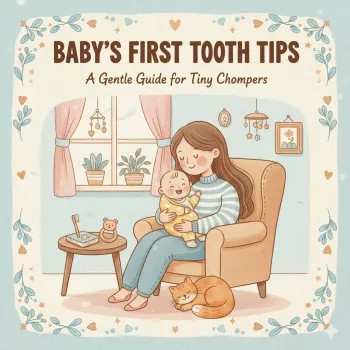
A first tooth is exciting, but it can also bring sore gums, disrupted sleep, and lots of guesswork. Teething looks different from baby to baby, so it helps to know what’s typical, what’s not, and which soothing steps are both effective and generally safe. Below is a practical approach for getting through those fussy moments while building simple oral-care habits that support healthy little teeth from day one.
Most babies start teething somewhere around 4–7 months, but there’s a wide normal range. Some babies cut a tooth earlier, and others don’t see one until closer to their first birthday—either can still be normal.
Common teething signs include drooling, gum rubbing, wanting to chew, mild fussiness, and sleep disruptions. It can feel unpredictable because teething often overlaps with other big changes (growth spurts, new foods, more awareness of the world). A slightly elevated temperature can happen, but a high fever isn’t expected from teething alone. If your baby seems truly ill, it’s worth checking for another cause.
Start with non-medicine comfort strategies. They’re often enough—especially when used early, before fussiness escalates.
| Option | How to use | Safety notes |
|---|---|---|
| Chilled teething ring | Refrigerate and offer during fussy periods | Avoid freezing hard; discard if cracked or leaking |
| Cool, damp washcloth | Knot it and chill briefly; supervise while chewing | Use a clean cloth; remove once it warms |
| Gum massage | Rub gently for 30–60 seconds at a time | Stop if baby seems uncomfortable |
| Chewy foods (for older babies already on solids) | Offer appropriate textures (e.g., chilled cucumber spear) with close supervision | Follow solid-food readiness and choking-risk guidance |
Distraction also matters more than it gets credit for. A cuddle break, a calmer room, a short walk, bath time, or stepping outside for fresh air can lower overall stress and make gum soreness easier to tolerate. Keep hydration steady, too—lots of drooling (and occasional mouth breathing) can leave babies feeling dry and cranky.
Skip numbing gels unless a pediatric professional specifically recommends one; some ingredients aren’t advised for infants. For additional basics, the American Academy of Pediatrics has clear guidance on teething and early tooth care.
If comfort measures aren’t enough and your baby is clearly distressed—especially at night—ask your pediatrician about appropriate pain relief. If a medicine is recommended, use only infant-appropriate options and follow dosing directions based on your baby’s age and weight.
Never give aspirin to children, and avoid alcohol-based remedies. Also treat serious symptoms as a reason to pause and reassess: significant fever, vomiting, rash, ear pulling, unusual sleepiness, or signs of dehydration (fewer wet diapers, dry mouth, no tears when crying) should prompt medical advice to rule out illness that’s being mistaken for teething.
Oral care doesn’t need to be complicated, but consistency pays off. Once the first tooth shows up, wipe gums and the new tooth with a clean, soft, damp cloth after feeds and before bed. As teeth increase, transition to a small, soft-bristled baby toothbrush.
When brushing begins, use a tiny smear of fluoride toothpaste—about the size of a grain of rice—unless a dentist advises otherwise. Fluoride helps strengthen enamel and lowers cavity risk. The CDC’s children’s oral health basics overview is a helpful reference on why early habits matter.
A key cavity-prevention step: avoid putting your baby to bed with a bottle. Prolonged exposure to milk or juice can feed cavity-causing bacteria, even when teeth are newly erupted.
Plan a first dental visit around the first birthday or within six months of the first tooth appearing, as recommended by dental organizations like the American Dental Association.
Teething can nudge sleep off track, but big routine overhauls often backfire. Keep your usual rhythm steady and add small soothing supports: extra rocking, a brief wind-down song, or a shorter bedtime routine when your baby is overtired.
If you prefer a calm, checklist-style approach you can reuse for each new tooth, the Baby’s First Tooth Tips Ebook lays out practical steps for soothing sore gums, starting early brushing habits, and knowing when symptoms may be something else.
For caregivers who like extra structure in daily routines beyond teething (feeds, sleep, wellness reminders), Using AI to Keep Your Pet Happy and Healthy is another digital guide in stock that focuses on planning and tracking day-to-day care tasks.
Discomfort often peaks for a few days around when the tooth breaks through the gum, then eases. It can come and go, and some babies have overlapping symptoms as multiple teeth start moving at once.
A mild temperature change can happen, but high fever and significant diarrhea are not typical teething symptoms. If you’re seeing strong symptoms or your baby seems ill, contact a clinician to check for another cause.
Begin brushing as soon as the first tooth appears, using a small, soft-bristled baby toothbrush. Use a smear of fluoride toothpaste about the size of a grain of rice unless your dentist advises otherwise, and plan a first dental visit around age one or within six months of the first tooth.






Leave a comment