Day One With Your Kitty: A Simple Checklist for a Calm First 24 Hours
The first day with a new kitten or adult cat sets the tone for trust, routines, and health. A calm, predictable setup helps your cat feel safe enough to eat, use the litter box, and start bonding at their own pace. Use the checklist below to focus on safety, essentials, low-stress introductions, and a few key health watch-outs—so you can feel confident from the moment your kitty comes home.
Before Arrival: Set Up a Quiet “Home Base” Room
Plan for your cat to spend the first night (and often the first couple days) in one quiet, low-traffic room with a door—like a bedroom, office, or large bathroom. A smaller space is less overwhelming and makes it easier to spot normal behaviors versus signs of stress.
- Choose a small, low-traffic room with a door to reduce overwhelm.
- Remove hazards: dangling cords, toxic plants, small swallowable items, open windows, unstable shelves.
- Place key stations far apart: litter box in one corner, food/water on the other side, bed/hideaway in a separate spot.
- Add comfort items: soft blanket, a covered hiding box, and a scratching surface (vertical or horizontal).
- Prepare a carrier “parking spot” so the carrier can remain open as a safe retreat.
Home Base Setup Checklist
| Item |
Where to place it |
Why it matters |
| Litter box + unscented litter |
Quiet corner away from food |
Encourages immediate, stress-free litter use |
| Food bowl |
Away from litter, near wall |
Keeps eating area clean and predictable |
| Water bowl or fountain |
Separate from food if possible |
Many cats drink more when water is apart from food |
| Hideaway (box/covered bed) |
Against a wall or under furniture |
Gives a safe place to decompress |
| Scratcher |
Near entry or sleeping area |
Directs scratching to appropriate surfaces |
| Toys (1–2 simple options) |
In the room, rotated later |
Supports gentle play without overstimulation |
Arrival Moment: The First 30 Minutes
Your main goal is to reduce pressure. Curiosity comes faster when your cat controls the pace.
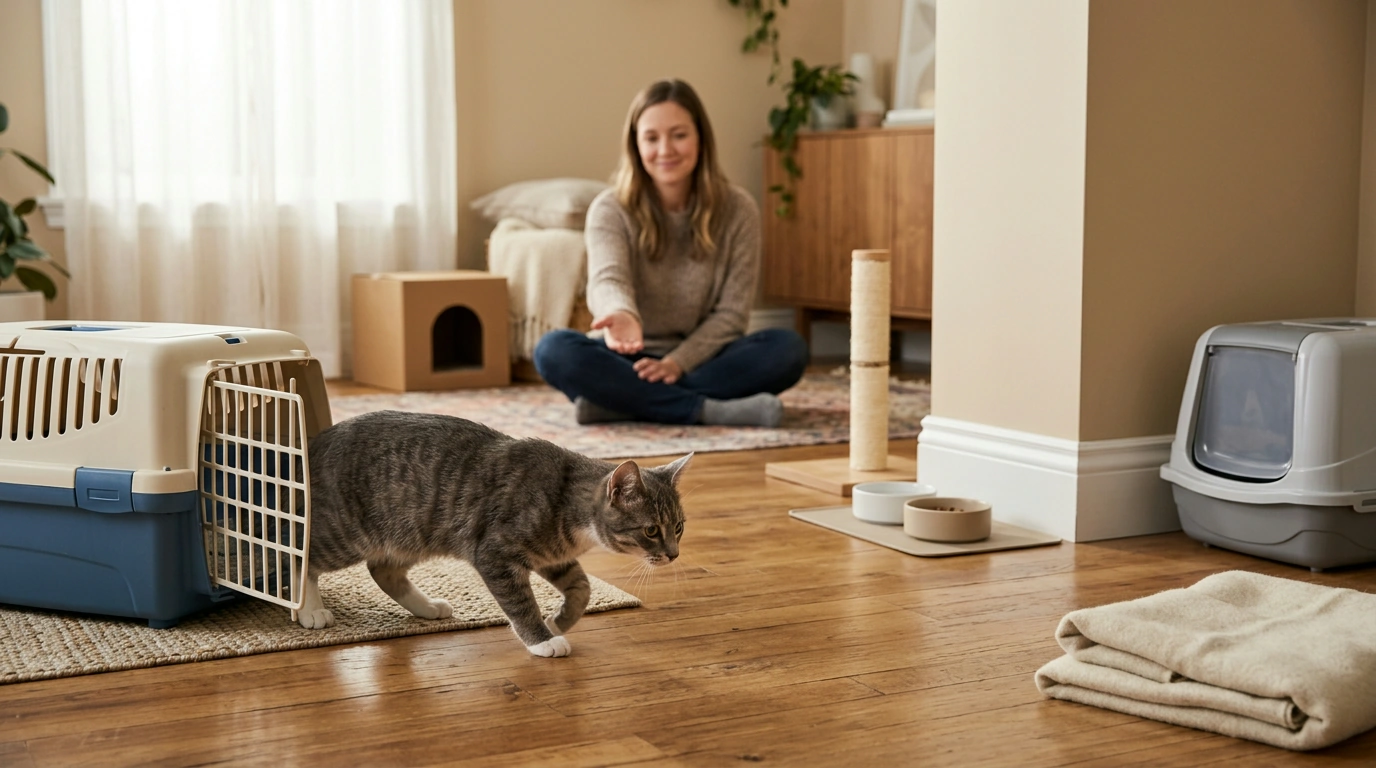
- Carry the cat in the carrier directly to the home base room; keep voices calm and movements slow.
- Open the carrier door and allow the cat to exit on their own; avoid reaching in or pulling them out.
- Sit on the floor and let the cat approach first; offer a quiet finger to sniff rather than petting immediately.
- Keep other pets and children out at first; initial introductions can wait until the cat is settled.
- If hiding happens, let it happen; place food, water, and litter within easy access and give space.
The First 2–4 Hours: Essentials Without Pressure
Think “basic needs, then peace and quiet.” Stress can suppress appetite and bathroom habits, so keep everything easy and consistent.
- Offer a small meal or a familiar food from the shelter/breeder if known; sudden diet changes can upset digestion.
- Show the litter box location once by gently placing the cat nearby (no forcing into the box).
- Limit visitors and noise; keep the room dimmer and avoid loud music or vacuuming nearby.
- Start a baseline routine: feed, refresh water, scoop litter, then leave quiet time for rest.
- Use pheromone support if needed (diffuser or spray) to reduce stress in a new environment.
Comfort and Confidence: Gentle Bonding on Day One
Bonding is less about doing “more” and more about reading body language accurately. On day one, calm and brief wins.
- Let the cat choose contact; begin with short, calm interactions and pause if ears flatten, tail flicks sharply, or the cat freezes.
- Offer treats for voluntary approach; reward curiosity and calm behavior.
- Try a brief, low-intensity play session (1–3 minutes) with a wand toy; stop before overstimulation.
- Provide a predictable “safe yes” environment: consistent layout, minimal rearranging, and steady timing of meals.
- For kittens: include extra nap spaces and keep play supervised to prevent chewing on cords or swallowing small objects.
Health and Safety Checks to Do Within the First Day
A new environment can mask symptoms, so a quick, gentle assessment helps you catch issues early. For general care guidance, reputable references include the American Veterinary Medical Association (AVMA), the ASPCA cat care library, and International Cat Care.
- Schedule a vet visit within 3–7 days (or sooner for kittens, unknown history, or any concerning symptoms).
- Check for basic red flags: not eating for 24 hours, repeated vomiting, labored breathing, severe lethargy, or diarrhea with dehydration.
- Confirm parasite prevention plan with a veterinarian; avoid using dog-only products on cats.
- Verify microchip and ID plan: update chip registration and prepare a breakaway collar if appropriate.
- Kitten-specific: ask about vaccine schedule, deworming, and age-appropriate flea prevention.
The First Night: Sleep, Feeding, and Litter Success
Night one is often the noisiest—new cats may cry, pace, or explore when the house finally gets quiet. Setting expectations now prevents accidental training that makes nighttime chaos last longer.
Day Two and Beyond: Expanding the Space and Building Routine
Helpful Guides for Staying Organized
FAQ
What should be done first when bringing a new cat home?
Start with a closed, quiet home base room. Open the carrier and let the cat exit voluntarily, then calmly point out food, water, and the litter box without forcing interaction.
How long should a new cat stay in one room?
Many cats do well with 1–3 days, while shy cats may need longer. Expand space when your cat is eating normally, using the litter box reliably, and showing curiosity instead of hiding or freezing.
When should a new kitten see a veterinarian?
Ideally within 3–7 days of arrival, and sooner if you notice vomiting, diarrhea, poor appetite, lethargy, sneezing, or eye/nose discharge. The vet can confirm vaccines, deworming, safe flea prevention, and overall health.
Recommended for you







Leave a comment