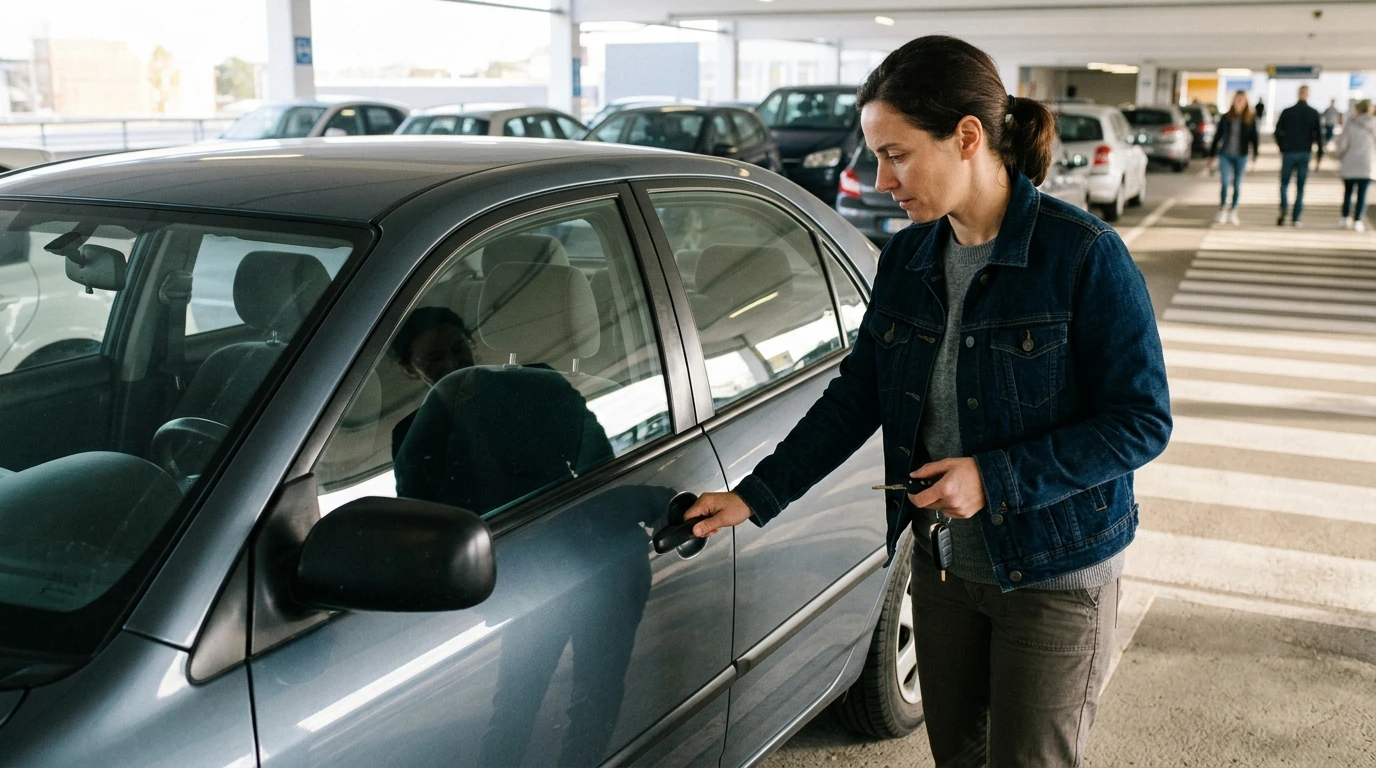
Car theft prevention works best when it’s built into the way a vehicle is parked, locked, and left—every single time. The goal isn’t to buy a pile of gadgets; it’s to reduce opportunity with a repeatable routine. Below is a driver-friendly security checklist, smart parking habits, and quick decisions that make a real difference—plus a ready-to-use digital guide to keep the routine simple.
Most vehicle crimes reward speed. When you shrink the time a thief can work—and remove the cues that something valuable might be inside—you’re already doing the heavy lifting.
Consistency wins. When you always exit the same way, you’re less likely to miss the one step that mattered on the one day someone was watching.
| Situation | Do this before leaving the car | Extra step that helps |
|---|---|---|
| Quick stop (gas, coffee, errands) | Lock doors, close windows, take phone/wallet/keys | Park where you can see the car from inside |
| Work/school (longer parked time) | Remove bags from view, lock, verify door pull | Choose a spot near lighting/cameras and regular foot traffic |
| Airport/hotel/overnight | Empty cabin, lock, keep keys shielded from relay theft risk | Ask about monitored parking; consider a steering-wheel lock |
| Street parking | No items visible, lock, mirrors folded if it helps avoid damage | Park under lighting and near active storefronts |
| Home driveway | Lock, close windows, don’t leave spare keys in the car | Store keys away from doors; consider motion lights |
Where you park can matter as much as what you do. A thief is less likely to linger in a spot that’s bright, busy, and observable from multiple angles.
For broader theft-prevention guidance and trends, you can also review resources from the National Insurance Crime Bureau (NICB) and the NHTSA vehicle theft prevention page.
Break-ins are often about what a thief can grab quickly. Your goal is to make your interior look boring and your timing hard to predict.
Our team’s rule: start with the routine and parking decisions, then add tools that increase time, noise, or risk for a thief.
If you want the routine in one clean place, our digital download keeps the steps short and skimmable: Lock It Like a Pro – Car Theft Prevention Guide (digital download).
And if you like practical, make-it-easy guides in general, you may also want: Sneakers at Work, Styled Right – Office-ready outfits made easy.
Close windows fully, take your keys and essentials with you, and lock the car the same way every time. Confirm it’s locked with a quick door pull, and when you can, choose a well-lit, visible spot.
Yes—if the items are already in the trunk before you arrive and you don’t move them around while parked. The “stash and walk away” moment is what attracts attention, so the safest standard is an empty-looking cabin.
Store key fobs away from entry doors and windows, and avoid leaving keys near the garage or inside the vehicle. A signal-blocking pouch or box can help, and layered deterrents plus consistent locking habits are stronger than any single step.






Leave a comment