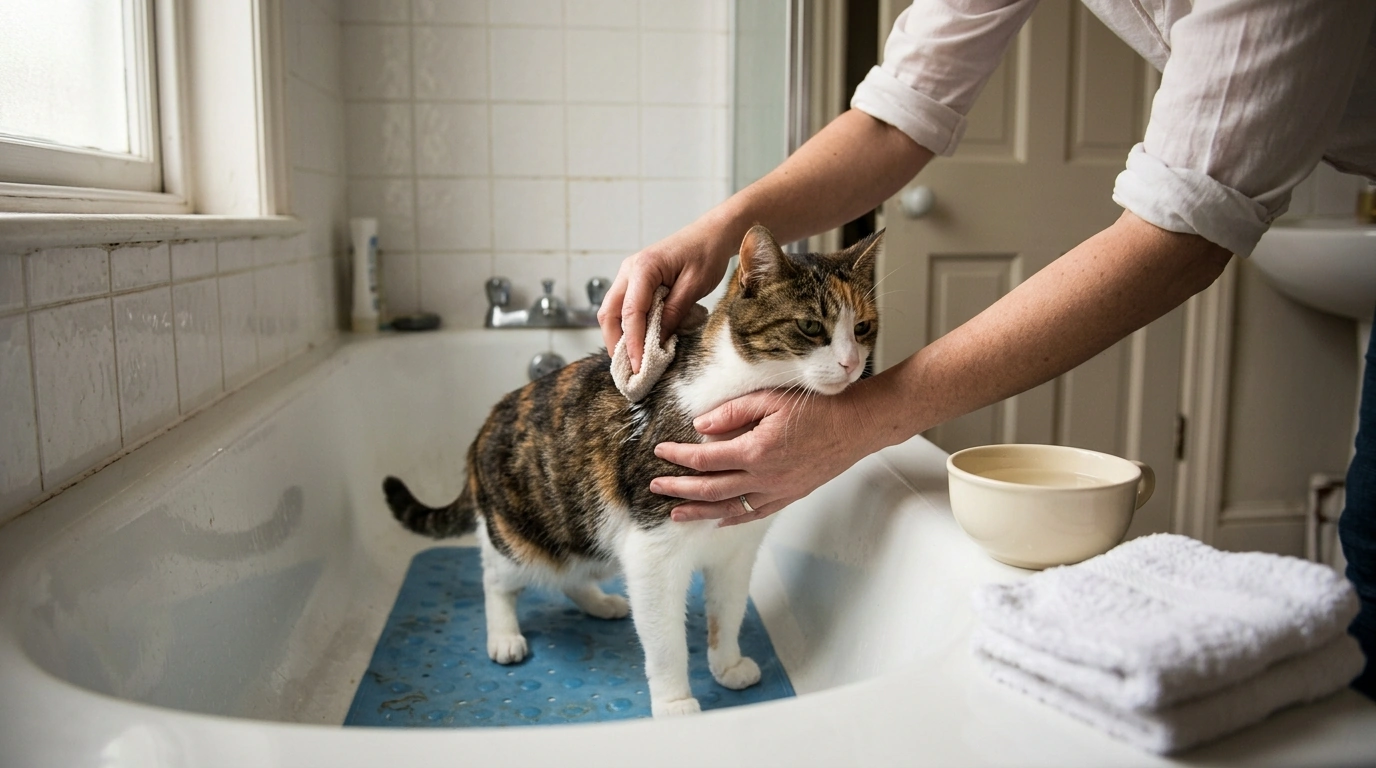
Some cats treat bath day like an emergency—and it’s not because they’re being “difficult.” Water, slippery surfaces, loud faucets, unfamiliar scents, and restraint can stack into a full-body stress response. Our team’s approach centers comfort, safety, and gentle handling so bath time becomes shorter, quieter, and far less dramatic when a bath is truly needed.
Most cats don’t need routine baths. Before you commit to the tub, decide whether you’re dealing with a true “must clean now” situation or something brushing and spot-cleaning can handle.
| Situation | Lower-stress first choice | When a bath makes sense |
|---|---|---|
| Light odor or normal shedding | Brush + damp microfiber cloth | If odor is persistent or paired with skin changes (vet check recommended) |
| Small sticky spot | Spot clean + pet-safe wipes | If substance is widespread or potentially toxic |
| Greasy coat or dandruff | Gentle grooming + diet/vet check | If vet-prescribed medicated bathing is advised |
| Fleas/flea dirt | Vet-recommended flea control plan | Bath can help remove debris, but won’t replace proper flea treatment |
| Soiling (diarrhea/urine) | Targeted “butt bath” + trim (pro help if needed) | Full bath only if contamination is extensive |
Your setup does a lot of the calming for you. The goal is to eliminate scrambling, reduce sensory triggers, and prevent slippery panic.
If your cat panics easily, the fastest path to a calmer bath is often going slower first—tiny exposures that end before fear spikes.
When a bath is truly needed, aim for “quick and predictable,” not “perfect.” Most cats do better with targeted cleaning instead of full-body soaking.
If you want a structured routine you can follow step-by-step, our team recommends Splish, Splash, No Panic: Gentle Solutions for Cats Who Hate Baths (Digital Guide). For cutting down shedding and coat buildup on non-bath days, the Luxury Dog Washing Brush Hair Remover Glove & Comb Tool Set for Grooming Cats & Dogs can help you do short, reward-based grooming sessions that make “emergency baths” less common.
For additional grooming and care guidance, see the American Veterinary Medical Association (AVMA) cat care resources, the ASPCA cat grooming tips, and the Cornell Feline Health Center.
Most cats rarely need full baths unless they’re contaminated, can’t self-groom well, or your veterinarian has prescribed medicated bathing. For routine upkeep, you’ll usually get better results with brushing and spot cleaning, and recurring odor or skin issues should be checked by a vet.
Stop early and end on the calmest note you can, then switch to micro-desensitization steps over several days. Next time, use a non-slip mat, shallow water with cup-wetting, a quick towel wrap for resets, and shorter sessions focused only on the dirty areas.
Routine scruffing can increase fear and struggling, especially in cats that already panic, so supportive holds and towel techniques are typically safer and calmer. If you can’t bathe your cat without strong restraint, it’s safer to involve a veterinarian or an experienced cat groomer.





Leave a comment