HomeBlogBlogEasy Dog Grooming Routine for Skin, Comfort & Less Shed

Easy Dog Grooming Routine for Skin, Comfort & Less Shed

Easy Dog Grooming Routine for Skin, Comfort & Less Shed

Fresh Fur, Happy Pup: A Practical Grooming Routine for Comfort, Skin Health, and a Cleaner Home

A consistent grooming routine does more than keep a dog looking tidy—it supports skin and coat health, reduces shedding in the home, helps spot problems early, and makes handling less stressful over time. The key is making grooming simple, predictable, and repeatable, so it fits into real life (even on busy weeks). For a deeper, step-by-step walkthrough with checklists, Fresh Fur, Happy Pup: The Ultimate Grooming Guide for Your Dog’s Health and Happiness – eBook Download is a convenient companion for building habits that stick.

Why grooming matters beyond appearance

  • Skin and coat are a health barometer: dryness, excess oil, dandruff, redness, odor, or sudden shedding changes can signal allergies, parasites, infection, or nutrition issues.
  • Brushing supports comfort and cleanliness: it distributes natural oils, helps prevent mats that tug painfully at skin, and reduces hair and dander around the house.
  • Handling becomes easier over time: routine touch around paws, ears, and mouth builds tolerance, making nail trims, exams, and vet visits safer.
  • Grooming doubles as a wellness check: lumps, ticks, hot spots, cracked paw pads, and ear irritation are easier to catch early.

A calm setup that makes grooming easier

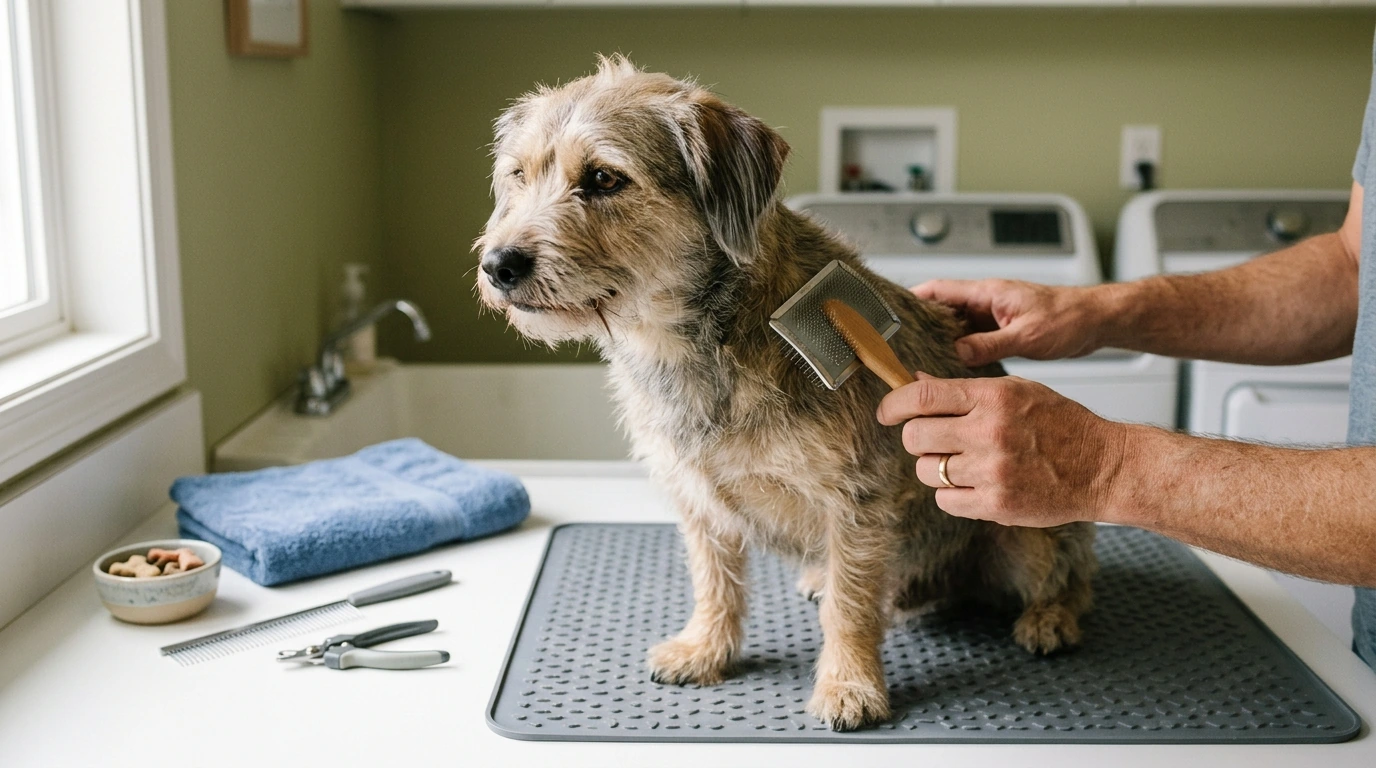
  • Set the stage: use a non-slip surface, good lighting, and choose a time when your dog is naturally calmer (often after a walk or play).
  • Start small: keep early sessions to 2–5 minutes with breaks. End on a “win” before your dog is overwhelmed.
  • Reward cooperation in the moment: treat for standing still, offering a paw, or allowing an ear touch—not just after the whole session.
  • Introduce tools gradually: let your dog sniff the brush, touch it briefly to the body, then reward. Increase duration slowly.
  • Safety basics: never leave a dog unattended on a table; avoid scissors close to skin unless trained; stop if there’s pain, heat, or bleeding.

Brush smarter: choosing the right tools for the coat

Matching the brush to the coat saves time and reduces frustration. A tool that “works” on one dog may be ineffective (or irritating) on another.

  • Short coats: rubber curry brush or grooming glove for loose hair; soft bristle brush to finish and add shine.
  • Double coats: undercoat rake or deshedding tool used gently; slicker brush for surface tangles. Avoid overdoing deshedding tools to prevent irritation.
  • Long or silky coats: pin brush for maintenance; slicker for tangles; metal comb to check hidden knots behind ears and in feathering.
  • Curly or wavy coats: slicker brush plus a metal comb is a common pairing; detangling spray can reduce breakage; consistency prevents tight mats.
  • Wire coats: stripping tools may be appropriate for certain breeds; if unsure, consult a groomer to avoid coat damage.

If you want a structured, repeatable routine (including which zones to brush in what order), keep a reference like Fresh Fur, Happy Pup – eBook Download handy near your grooming tools.

Bath time without the battle

For more general grooming guidance from a trusted source, see the American Kennel Club (AKC) grooming resources.

Nails, paws, and paw-pad care

Ears, eyes, and teeth: small habits with big impact

For broader pet-owner guidance and when to seek care, the American Veterinary Medical Association (AVMA) pet resources are a helpful reference point.

A simple grooming schedule to follow

At-a-glance grooming frequency by task

Task Best starting frequency Notes
Brushing 2–4x/week (daily for long/curly coats) Focus on friction zones: behind ears, collar area, armpits, belly, tail
Bath Every 4–8 weeks More often only with a gentle, dog-safe shampoo; rinse thoroughly
Nail trim Every 2–4 weeks If nails click on floors, they’re usually too long
Ear check Weekly Clean only if needed; watch for odor, redness, discharge
Teeth brushing 3–7x/week Short sessions beat “perfect” sessions; build gradually
Skin & coat check After outdoor time + weekly full check Look for ticks, hot spots, bumps, dandruff, redness

When to call a professional groomer or veterinarian

Making it stick: a routine that fits real life

FAQ

How often should a dog be bathed?

For most dogs, every 4–8 weeks is a practical starting range. Dogs with muddy lifestyles, swimming habits, or allergies may need adjustments, but stick to dog-specific shampoo and rinse thoroughly to avoid itchiness. If your dog has a medical skin condition, follow a vet-directed bathing plan.

What are the signs that mats are becoming a health problem?

Tight mats can pull on skin, trap moisture and dirt, and lead to irritation or hot spots while hiding parasites. Red flags include pain when touched, odor, redness, dampness under the mat, or skin sores. Severe matting is safest to address with a professional groomer (or veterinarian if skin is compromised).

Is it safe to use a deshedding tool on a double-coated dog?

Yes, with caution: use a light touch, avoid repeated scraping in one area, and follow with regular brushing to lift loosened undercoat. Stop if the skin looks pink or irritated, and don’t overuse—too much can damage coat and skin. For heavy seasonal coat blows, a groomer can help remove undercoat safely and efficiently.


Was this article helpful?

Yes No
Leave a comment
Top

Shopping cart

×