Relax and Recharge Checklist: a simple progressive muscle relaxation routine for daily calm
Some days your mind feels busy and your body feels stuck in “on” mode. When that happens, a short, repeatable routine can help break the loop—especially when it’s written down and easy to follow. Our Relax and Recharge Checklist is a printable progressive muscle relaxation (PMR) routine designed to support stress relief, anxious moments, and an easier wind-down before sleep, with the gentle structure of a daily checklist.
What the Relax and Recharge Checklist is designed to do
- Turn relaxation into a doable sequence: small steps that reduce decision fatigue when stress is high.
- Guide a classic progressive muscle relaxation flow: gently tense, then release muscle groups to signal safety to your nervous system.
- Support a daily calm routine: usable in a morning reset, mid-day break, or evening wind-down.
- Encourage consistency without pressure: a checklist format that makes “done” feel clear and satisfying.
- Fit real life: a print-and-go digital download that can live by your bed, desk, or inside a planner.
How progressive muscle relaxation helps the body switch gears
- PMR works by pairing attention with physical release—helping you notice where tension hides (jaw, shoulders, hands, hips).
- The “tense then soften” pattern can reduce the feeling of restlessness and bring your body out of bracing mode.
- A consistent PMR routine can become a cue for calm: repeating the same order teaches your body what comes next.
- It’s practical for anxious moments because it anchors attention in sensation rather than spiraling thoughts.
- It can pair well with slow breathing: exhale during the release phase to reinforce letting go.
If you’d like a deeper overview of relaxation methods from trusted health sources, you can also reference the American Psychological Association’s guidance on stress management (APA – Stress), the Mayo Clinic’s PMR overview (Mayo Clinic – Progressive muscle relaxation), and the NIH’s NCCIH page on relaxation techniques (NCCIH – Relaxation techniques).
A simple daily calm routine (use the checklist as your trackable plan)
- Pick a time window: morning (set the tone), afternoon (reset), or evening (sleep support).
- Create a tiny cue: tea kettle on, lights dimmed, phone on silent, or a single calming song.
- Follow the checklist in order: keep the sequence the same so the routine feels familiar.
- Use a comfort-level rule: tension should be mild (never painful); release should feel like softening, not straining.
- Close with a transition step: water, a gentle stretch, or a low-stimulation activity so calm “sticks” after the routine.
Quick routine map: when to use the Relax and Recharge Checklist
| Moment |
Best for |
Suggested length |
Helpful add-on |
| Morning reset |
Starting the day less reactive |
5–10 minutes |
One intention for the day |
| Mid-day calm break |
Stress spikes, tension headaches, screen fatigue |
3–8 minutes |
Shoulder rolls + water |
| Evening wind-down |
Anxiety, racing thoughts, bedtime routine |
8–15 minutes |
Dim lights + slower breathing |
Making the checklist work on stressful days (when motivation is low)
- Use the “minimum version”: complete only the first few muscle groups, then stop—partial progress still counts.
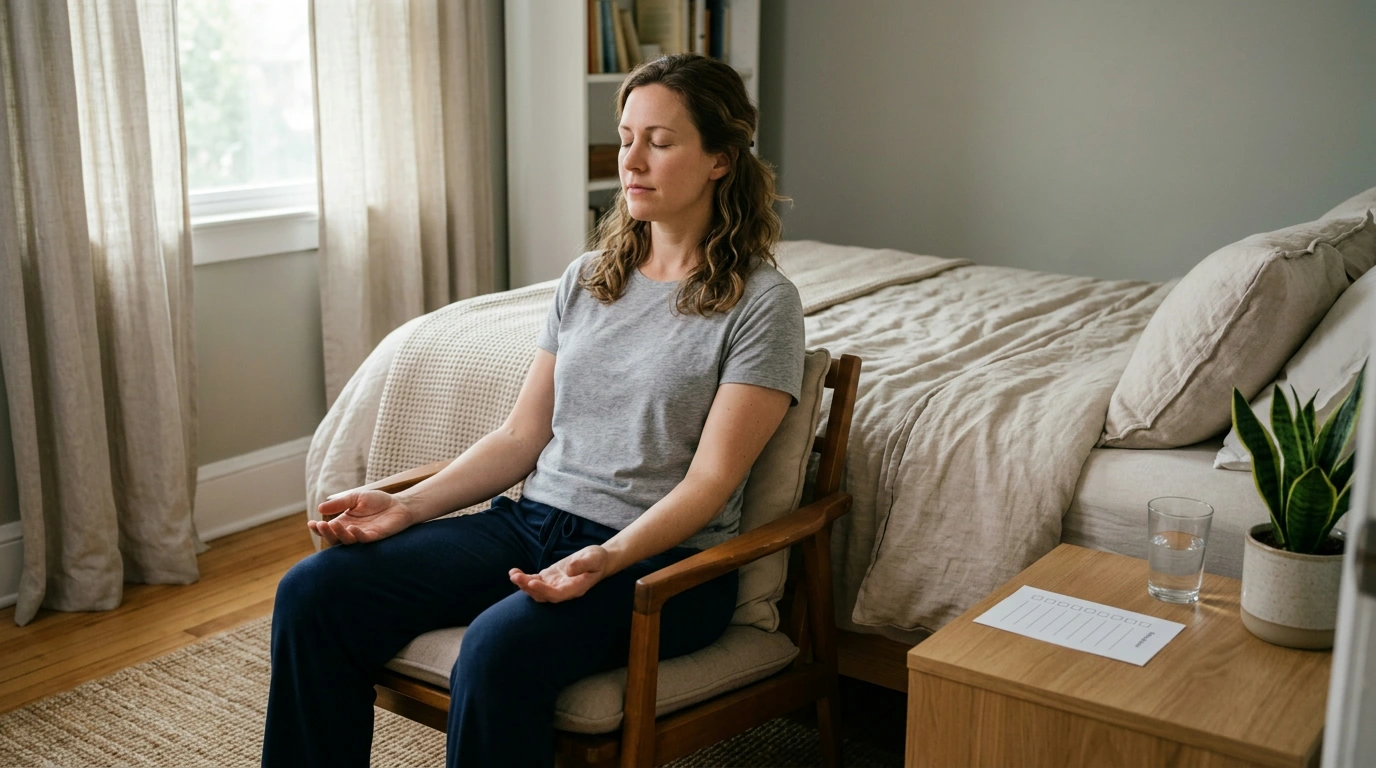
- Try a seated option: you can do the routine in a chair when lying down isn’t practical.
- Keep it visible: place the printable where stress usually hits (nightstand, workspace, bathroom mirror).
- Pair it with one boundary: a short phone break, notification pause, or quiet-room cue.
- Track without judgment: a missed day isn’t a restart—just continue on the next checkmark.
Who this printable fits best
- Anyone building a daily calm routine who prefers clear steps over open-ended journaling.
- People who hold stress in the body (tight shoulders, clenched jaw, restless legs).
- Busy schedules that need a quick, repeatable decompression tool.
- Bedtime wind-down routines that need structure (especially when thoughts run fast).
- Caregivers, students, and remote workers who want a simple stress-relief printable within reach.
What’s included and how to use it as a digital download
Our team’s picks to support a calm, put-together routine
FAQ
How long should a progressive muscle relaxation routine take?
Most PMR routines fit well in about 5–15 minutes. On busy days, a short version (just a few muscle groups) still helps; at bedtime, taking a little longer can make the wind-down feel more complete. Consistency matters more than duration.
Can the checklist help with anxiety or sleep support?
It’s designed to be a supportive calming tool, not a cure. Relaxing your muscles and slowing your exhale can make it easier for your body to downshift, which many people find helpful during anxious moments or as part of a bedtime routine. For sleep support, use it with lower lights and minimal screens afterward.
Do you have to tense every muscle group for PMR to work?
No—mild tension is optional and should never be painful. You can use a “soften and release” approach, especially for sensitive areas like the jaw and neck, and still get the benefits of focused attention and letting go.
Recommended for you





Leave a comment