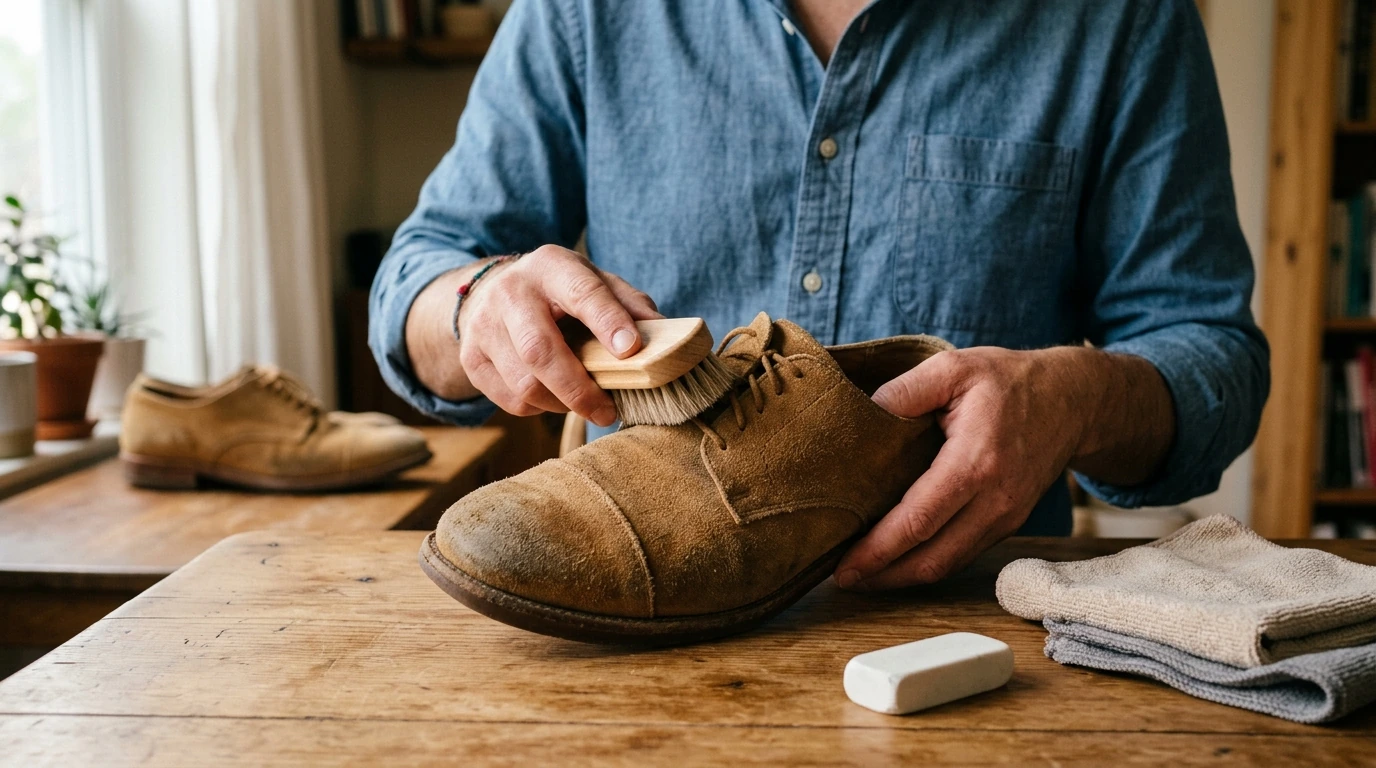
Suede looks effortless when it’s clean, brushed, and evenly textured—then one rainy sidewalk or mystery scuff can make it look tired overnight. The good news: suede care at home is straightforward when the right order is followed (dry first, brush second, spot-clean third). Our team uses the same repeatable routine for day-to-day upkeep, stain triage, and longer-term protection so your suede shoes stay soft, even-toned, and wearable season after season.
Suede is leather with a raised nap. That texture is what makes it look rich—and what makes it show pressure marks, water lines, and oils faster than smooth leather. Most “ruined suede” moments at home come from two avoidable mistakes: cleaning while the shoe is still wet and over-saturating during stain removal.
Your real goal is consistency: keep the nap lifted, keep moisture controlled, and treat stains early enough that you don’t have to scrub hard.
You don’t need a complicated setup to get professional-looking results. Start with a few basics you can dedicate to shoes:
If you want a guided, printable routine you can follow without guesswork, we keep our home method in The Art of Suede Care: Home Edition – Ultimate Guide to Suede Shoes Cleaning & Maintenance.
Any time suede gets wet—rain, spills, or even a damp cloth—pause and let the shoes dry fully at room temperature before you do anything aggressive. Stuff them with plain paper to hold shape and help pull moisture from the inside (avoid ink-heavy newsprint on light suede).
Once dry, brush with light pressure in one direction to lift the nap and remove dust. Only after that should you use short back-and-forth strokes where texture looks uneven. For zones that stay flattened, you can introduce a little steam at a distance (like bathroom steam or a kettle held well away), then brush again once the surface is dry—never soak.
Suede stays easy when you keep grit and pressure marks from building up. After wearing your pair:
Work dry whenever possible. A surprising number of marks improve with brushing and light erasing before any liquid touches the shoe. If moisture is involved, blot—don’t rub—because rubbing pushes grime deeper into the nap and spreads the spot.
When a stain is strong enough that a “dot treatment” leaves a halo, treat the full panel lightly and evenly, then dry and brush. That’s how you keep color consistent.
| Problem | First Response (At Home) | Next Step if It Lingers | Finish |
|---|---|---|---|
| Dry dirt/dust | Let dry fully; brush in one direction | Eraser on remaining marks, then brush | Light buff with clean cloth |
| Scuff/shine spot (flattened nap) | Brush with short strokes to lift nap | Eraser lightly; optional gentle steam at a distance | Brush to blend texture |
| Water spot / water line | Blot; allow to dry naturally | Evenly dampen the whole panel lightly, then dry and brush | Brush until uniform |
| Oil/grease | Cover with cornstarch/talc; leave 6–12 hours | Repeat once; then brush | Brush thoroughly to remove residue |
| Mud | Let it dry completely | Brush off; eraser for leftover staining | Brush to lift nap |
For background on why gentle handling matters with leather and hide materials, see the guidance from the Smithsonian Museum Conservation Institute and the Leather Conservation Centre.
If you’re planning outfits where suede sneakers or casual suede shoes are part of your work rotation, our team also put together Sneakers at Work, Styled Right – A Modern Style Guide on How to Style Sneakers for Work Outfits to help you keep looks polished while choosing materials you can maintain.
Yes, but only sparingly and evenly. Saturating suede creates water lines and uneven color, so if you use water, dab lightly and (when needed) even out the whole panel, then let it dry slowly and brush to restore the nap.
Cover the spot with cornstarch or talc and let it sit for 6–12 hours to absorb the oil, then brush it off. Repeat once if needed, and avoid rubbing or jumping straight to liquid cleaners.
Apply it before the first wear and again after deep cleaning once the shoes are fully dry. If you wear the pair often or face wet conditions, reapply more frequently using light coats and allowing full cure time.





Leave a comment