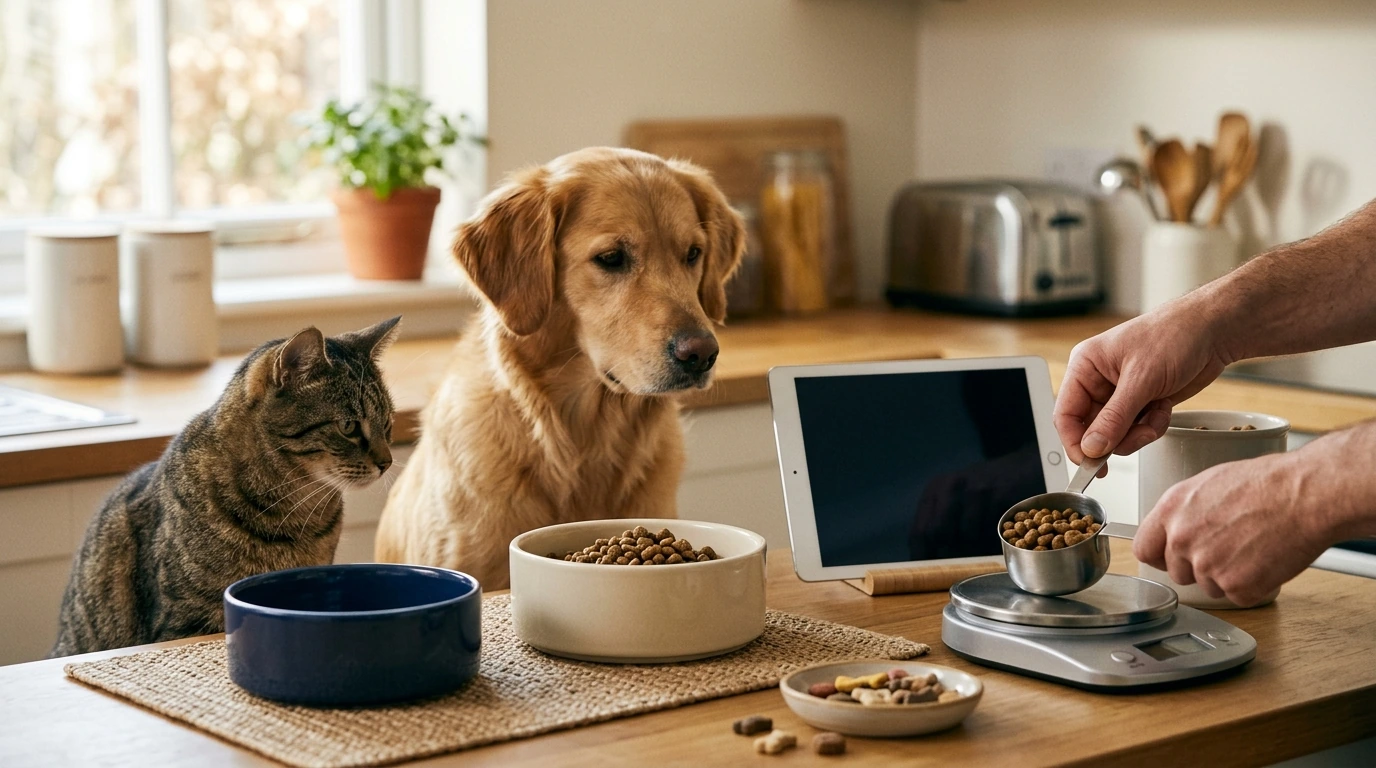
Portion sizes, treat habits, and meal timing shape energy, weight, digestion, and behavior. A simple routine—built around measured meals, mindful treats, and consistent check-ins—can reduce overeating and help dogs and cats maintain healthy body condition without turning feeding time into a daily struggle.
High-quality ingredients are a great start, but calories still count. Excess energy adds up quickly, especially when “just a little extra” happens daily—an overfilled scoop, a few training treats, a chew, or table scraps.
If you want a science-based overview of how veterinary teams evaluate diet quality and feeding practices, the WSAVA Global Nutrition Guidelines are a strong reference point.
Weight matters, but body condition matters more. Two pets can weigh the same and look completely different—one lean and fit, one carrying extra fat. The simplest target is a healthy body condition score (BCS):
Use weigh-ins as a trend line. Weekly or biweekly checks are more useful than daily fluctuations caused by hydration, stool, and timing. If weight loss is needed, ask your veterinarian for an ideal target range and a safe pace—especially for cats, where rapid weight loss can be dangerous. For guidance that aligns with veterinary best practices, see the AAHA Weight Management Guidelines for Dogs and Cats.
In multi-pet homes, track each pet separately. “One scoop fits all” often turns into one pet gaining and the other hovering near “always hungry.”
Feeding guides on pet food packaging are a starting point, not a final answer. Your best portion depends on age, activity level, neuter status, metabolism, and current body condition.
| Tool | Best for | Common mistake it prevents |
|---|---|---|
| Kitchen scale (grams) | Accurate daily portions for kibble or wet food | Overfilling cups and “eyeballing” |
| Measuring cup | Quick portions when a scale is not available | Using different cup sizes or heaping scoops |
| Portion container or pre-bagged meals | Busy schedules, multi-pet households | Accidental double-feeding |
| Treat jar with daily limit | Training and snackers | Untracked “just one more” treats |
| Puzzle feeder or slow bowl | Fast eaters, boredom eaters | Gulping and immediate begging |
For a visual explanation of BCS basics (what “ribs felt easily” actually means), Cornell’s veterinary resources are a helpful starting point: Cornell University College of Veterinary Medicine.
A routine works best when it’s predictable for your pet and easy for your household to follow.
If you want a ready-to-follow framework with trackers and troubleshooting, Healthy Portions Happy Pets: Pet Nutrition Guide (digital download) is designed to make daily consistency easier—especially when multiple people feed the same pet.
To make the routine easier to maintain, some households use reminders and simple tracking tools. Using AI to Keep Your Pet Happy and Healthy offers a practical way to schedule feeding tasks, log treats, and stay consistent when life gets busy.
Many adult dogs do well on two meals per day, while cats often prefer multiple smaller meals. Life stage, medical needs, and your household schedule all matter, so confirm the best plan with your veterinarian for your specific pet.
A practical rule of thumb is to keep treats to a small share of the day’s intake and count chews and “extras” as calories, not freebies. If treat intake increases during training, reduce meal portions slightly to keep the daily total on track.
Use consistent meal times, enrichment feeding, and training to reward calm behaviors with attention, play, or approved small treats from a daily limit. If hunger becomes sudden or extreme, rule out medical causes with a veterinary visit.




Leave a comment